How to make a debt repayment plan that still covers your basics
List every debt, work out what your essentials really cost, find the amount you can truly put toward debt each month and take a realistic offer to your lenders. Snowball vs avalanche, what to ask when you renegotiate and how to spot debt relief scams.
When debt gets out of hand, the usual mistake is accepting the first payment plan a lender offers, paying it for a few months and falling behind again because rent or groceries came up short. A repayment plan only works if the payment fits after your essentials. These steps help you go into any negotiation with real numbers.
1. List every debt
For each one write down the lender, today's balance, the interest rate, the minimum payment, the due date and whether it is past due. Include credit cards, overdrafts, personal loans, store credit, buy-now-pay-later plans, car loans and overdue bills.
2. Work out your basics with real numbers
Add up what you cannot skip: housing, food, utilities, transport to work, health and medicine, childcare or school. Use the average of what actually left your account over the last 3 months, not a guess. Most people underestimate groceries and transport.
3. Find what is really left
Monthly take-home pay − basics = the most you can pay toward all debts combined. Keep a small buffer for surprises. If your current minimum payments add up to more than that, you are not bad with money: the numbers simply do not work, and that gap is exactly what you need to renegotiate.
4. Pick an order: avalanche or snowball
- Avalanche: pay the minimum on everything and put every extra cent on the debt with the highest interest rate. You pay the least interest overall.
- Snowball: put the extra on the debt with the smallest balance. You clear the first one sooner, and its payment then rolls into the next.
Either beats spreading a little money across everything. What matters is keeping every other debt at its minimum.
5. When you renegotiate
- Ask for the lump-sum settlement amount and the total cost of any installment plan, and compare them.
- Ask for the interest rate, fees and number of payments. A low payment stretched over many months can cost twice as much.
- Offer the payment from step 3, not the one the agent suggests.
- Only consolidate if the new loan is clearly cheaper and you will not run the old cards back up.
- Get every agreement in writing and keep proof of each payment and a final paid-in-full letter.
6. If even the minimums do not fit
Many countries have free help or formal procedures for people who cannot pay without giving up essentials: nonprofit credit counseling, consumer protection offices, or court-supervised repayment plans and personal insolvency. Rules and eligibility differ by country and change over time, so check with an official or nonprofit service where you live. This guide is not legal or financial advice.
7. Avoid debt relief scams
- Be wary of anyone who wants an upfront fee before settling a debt or "cleaning" your credit record.
- Contact lenders only through their official website, app or the phone number on your statement. Do not follow links from texts or chat messages.
- Before paying a settlement, check that the payee is your lender or the collection agency it named.
Where Dimebook helps
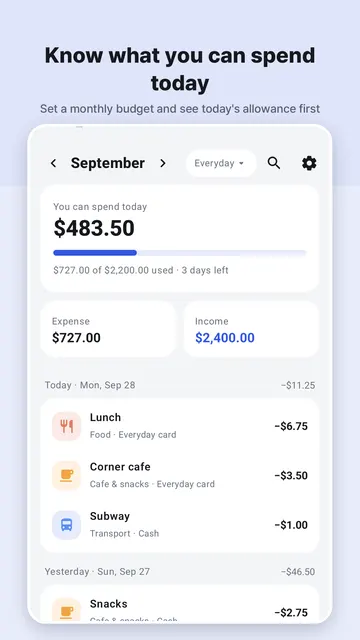
Dimebook is an expense tracker with no account that keeps everything on your phone. It helps with the hardest part of step 2: knowing what your basics really cost. Log a purchase in a few taps (or paste your bank's notification text), see by category how much went to rent, groceries, transport and health, and check how much you can still spend per day until month end. Fixed bills and installments can be set as recurring entries, and the home screen shows what is due in the next 30 days. The app does not negotiate for you, does not offer loans and does not check your credit.
New in Dimebook 1.5: the Debt payoff plan on the Accounts tab does the steps in this guide on your phone. List each debt with its rate (monthly or yearly) and minimum payment; the app uses the real average of your basic expenses and shows what is left each month. Choose highest interest first or snowball and see your debt-free month and total interest. If the minimums don't fit, it builds a renegotiation proposal with what you can pay each lender, ready to share as text.