Blood sugar spikes after eating: 7 meal habits that may help
What a blood sugar spike is, why symptoms alone can't tell you, and research-backed habits: eating order, protein and fibre with carbs, sugary drinks and a short walk after meals.
A blood sugar spike usually means glucose rising quickly and sharply after a meal, then dropping. Many people link it to an after-lunch slump or getting hungry again soon, but how much your glucose actually rises varies from person to person, and only a measurement can tell you. The habits below summarise general research. If you have diabetes or abnormal glucose, follow your care team first.
1. Vegetables and protein first, carbs last
Several studies found smaller rises in glucose after the same meal when people ate the vegetables and protein before the bread, rice or pasta. You change only the order, not the menu, which makes it easy to try.
2. Avoid carb-only meals
A plate with eggs, beans, fish or meat plus vegetables is generally a better choice than toast, pastry or noodles on their own. Protein at each meal also helps you stay full.
3. Add fibre
Whole grains instead of white, plus vegetables, beans and lentils, raise your fibre intake. Fibre may help slow how quickly carbs are absorbed.
4. Count sweet drinks as food
Sweet coffee drinks, juice and soda go down fast, all at once, with no chewing. When people log their drinks for a few days, they often find a large part of their sugar comes from them.
5. Don't break a long fast with sweets alone
After a long gap, pair something sweet with protein or fat, such as yogurt, milk or nuts, rather than eating biscuits or juice on their own.
6. Walk for 10 to 15 minutes after eating
Multiple studies show that even a short, easy walk after a meal can reduce the rise in glucose. Light housework counts too.
7. Check your own pattern by logging
Writing down what you ate, with carbs, sugar and fibre, for a few days shows patterns like "lunch is always just noodles" or "my afternoon drink is half my sugar". The glucose numbers themselves only come from a meter or a CGM.
When to see a doctor
If you have strong thirst, frequent urination or unexplained weight loss, or a check-up showed high fasting glucose or HbA1c, don't rely on habits alone. Get checked.
What DietSarge can and cannot do
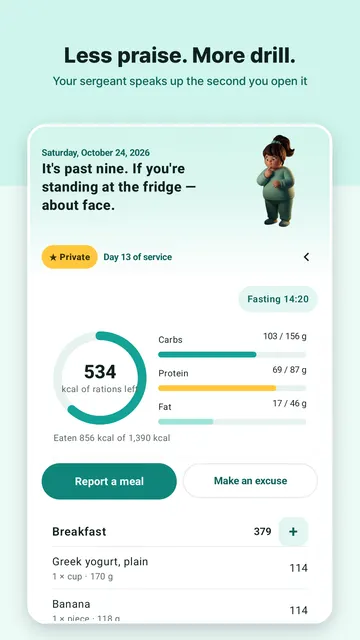
DietSarge does not measure blood sugar and does not connect to meters or CGMs. What it does: when you log your meals, the Today screen shows carbs, protein and fat, plus your daily sugar, fibre and sodium totals, so you can check in numbers whether you are keeping the habits above (vegetables and protein with carbs, fewer sugary drinks). If you need to manage glucose readings, follow your meter and your care team.