Morning vs evening workout: which is better? What studies show, and how to find your time
Strength, fat loss, muscle gain, sleep and blood sugar: what research says about exercising in the morning or the evening, plus a simple three-week test to find the time that works for you.
"Should I train in the morning or the evening?" is one of the most searched fitness questions. The short answer from research: both work, the differences are smaller than most headlines suggest, and the time you can keep doing week after week matters more than the clock. Here is what is known, goal by goal.
Performance: a small edge in the late afternoon
Body temperature, muscle power and reaction time follow a daily rhythm and usually peak in the late afternoon or early evening. In studies, strength and sprint performance are often a few percent higher then than early in the morning. Muscles and joints also feel less stiff. If you are chasing a personal best, an afternoon or evening session is a reasonable choice.
The body also adapts to the time you train. People who always train in the morning tend to narrow that gap over a few weeks, so a race at 8 a.m. is a good reason to train in the morning.
Fat loss: total effort matters more than the hour
Exercising before breakfast makes the body burn a larger share of fat during the session. But studies that followed people for weeks found similar fat loss with fasted and fed training when the total calories were the same. Some observational studies link morning exercise with better weight maintenance, mostly because morning sessions are skipped less often. Pick the time you will not skip.
Muscle gain: similar results
Long training studies (around six months) comparing morning and evening strength training found similar gains in muscle size and strength. Sleep, protein and progressive load matter far more than the time on the clock.
Sleep: evening exercise is usually fine
A common worry is that evening exercise keeps you awake. Reviews of sleep-lab studies found that evening exercise generally does not harm sleep, and moderate sessions may even help. The exception is hard, high-intensity exercise that ends within about an hour of bedtime, which can make it harder to fall asleep. If evening is your only time, finish intense work earlier and keep the last hour easy.
Blood sugar: moving after meals helps
Even a 10–15 minute walk after a meal lowers the rise in blood sugar that follows it. Some studies in people with type 2 diabetes found afternoon exercise improved blood sugar control more than morning exercise, but results are mixed. If you use insulin or blood-sugar-lowering medicine, ask your doctor about timing, because exercise can make levels drop.
Find your own best time: a three-week test
- Choose one repeatable workout: the same running loop, cycling route or gym session.
- Weeks 1–3: do it at least twice a week in the morning and twice in the evening, at a steady effort.
- Record each session: average pace or speed, heart rate if you have it, and how hard it felt from 1 to 10.
- Compare: at the same effort, when were you faster or was your heart rate lower? Which sessions did you actually do, and which did you skip?
- Decide: keep the time with better numbers and fewer skipped sessions. Then put it in your calendar like an appointment.
Tips for each time of day
- Morning: warm up longer (10 minutes), because muscles are stiffer after the night. Drink a glass of water first. A small snack helps if you plan a hard session.
- Evening: keep the hardest part at least an hour before bed. Eat a normal dinner afterwards rather than skipping it, and keep screens dim when you wind down.
- Either: consistency beats timing. Two fixed sessions a week you never miss are worth more than a perfect schedule you abandon.
Running the test with SportsUtil
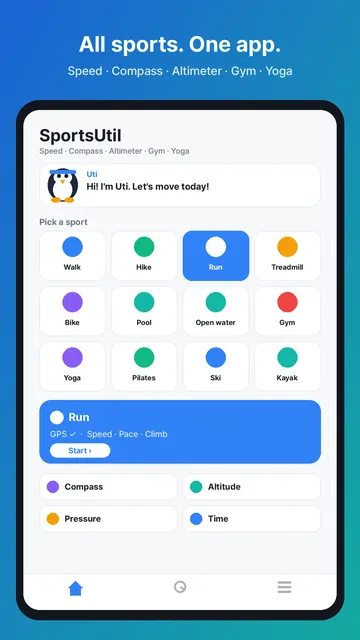
SportsUtil records runs, rides, walks and gym sessions with the start time, distance, moving time, average pace and speed, and heart rate if you pair a Bluetooth chest strap. Every workout stays in your history on the phone, so after a few weeks you can line up your morning and evening sessions on the same route and compare them yourself. It is a tracker, not a doctor: it shows your own numbers and does not give medical advice.